
On April 24, 2026, in Chicago, the Nationals and White Sox began the game with neither team having a traditional starting pitcher on the mound. It was the first time for both teams to have its “opener” match up with an opponent’s “opener.”
Relief pitchers PJ Poulin for Washington and Bryan Hudson for Chicago knew that their outings would be limited, regardless of their performance. In this case, traditional starters replaced them, although use of the so-called opener doesn’t require that to happen.
The pitchers after the opener could just as easily be other members of the team’s bullpen, although that more properly is a true bullpen game. That’s what the Dodgers did on May 15 – using as planned eight pitchers, all of them traditional relievers and seven of them going one inning each, to beat the Angels, 6-0.
Through the first two months of the 2026 season, 18 teams – 10 in the National League and eight in the American — had used openers to start games. At that point, four teams accounted for the bulk of those games, with Nationals having done it 11 times and the White Sox, Rockies and Rays close behind. In contrast, according to Baseball Reference, openers started just 14 games in which they were replaced by a long man last season.
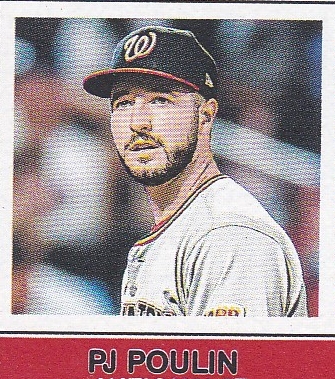
PJ Poulin of the Nationals has done it a league-leading seven as of May 28, starting in front of Miles Mikolas and Zach Littell.
The basic strategy behind the opener is straightforward: to produce a good matchup against the top of the opposing team’s batting order and to reduce the chance of a traditional starter having to face the opposing team’s lineup a third time.
The opener, first notably used by the Rays in 2018, was seen then as a bit of an aberration. Yet the use of openers spread quickly the next three seasons before dropping substantially in 2024 after the commissioner’s office began talking about a possible rule change.
According to Jon Becker of FanGraphs, circumstances also played a part in the substantial drop in the use of openers in 2024. Managers who favored the tactic were no longer managing. Pitching staffs that had many guys who did better in short bursts now had more starters capable of going deeper into games.
Using Stathead, Becker came up with a chart showing the number of openers used from 2017 through 2023, when it happened 154 times. The only other time opener-use topped 100 was in 2019, when openers started 165 games.
The first time both teams employed an opener to start apparently was on Sept. 4, 2018, when Tampa Bay reliever Cole Sulser, making his first career start, went two innings and threw 37 pitches. The Twins countered with rookie Ronny Henriquez, also making his first start. He pitched just the first inning.
Surely there have been instances in the past of someone other a presumed starter taking the mound in the first inning. Such cases normally would have been a result of a late injury or illness of a scheduled starter. The late substitute would have been counted on to pitch as long as possible, not just an inning or two. Now the presumption is that the opener will be removed at the some pre-defined pitch count or number of batters, no matter how well he is doing.
Before 2026, the Nationals had employed a reliever as a planned opener just once ever: Matt Grace did it on July 27, 2019, and pitched two perfect innings with three Ks. He gave way to starter Joe Ross, who had missed significant time with injuries. Ross was hit hard over four and two-thirds innings and was the losing pitcher that day to the Dodgers.
Early in 2019, MLB stats analyst Mike Petriello took a close look at what effect Tampa Bay’s use of openers in 42 games in 2018 had on the team’s pitching performance. He found the results inconclusive.
“It’s a gambit to put your weaker pitchers in a slightly better position to succeed. It’s a potentially small edge in a sport that thrives on finding those edges” Petriello wrote. “Whether or not it even provides that edge remains up for debate.”
The use of an opener had a limited but storied history long before 2018.
Most famously, it was employed as a ruse in Game 7 of the 1924 World Series. Lefty-batting Bill Terry of the Giants, in his rookie year, was terrorizing Washington’s pitching, going 6-for-12 against right-handers. Still, player-manager Bucky Harris announced that sore-armed righty Curly Ogden would start.
Giants’ manager John McGraw put Terry in the starting lineup, as Harris hoped. The real plan was to lift Ogden for the lefty George Mogridge after the first batter, but Ogden struck out Frankie Frisch on three pitches. After Ogden walked the next batter, Harris went to the mound to summon Mogridge, who had been warming up under the stands.
McGraw pitch hit for Terry. So that problem was solved. In one of the most dramatic Game 7’s of all time, a couple of bad hops — and perhaps fate — willed Walter Johnson in relief to hold off the Giants long enough for the first A.L. Senators franchise to win its only World Series.
With starting pitchers today so often going no more than six innings, does it make much difference if they come into the game after first or second inning? The rule that a starter must go five innings to be credited with a win surely could be modified. The Dodgers’ recent full bullpen game made a mockery of it, anyway. The second of their eight pitchers got the win for his relief inning. That’s if anybody worries about a pitcher’s wins these days.
A version of this appeared on May 24, 2026, in Here’s the Pitch, the online newsletter of the Internet Baseball Writers Association, and on Substack.

