
No playoff appearance was expected of the 2026 Washington Nationals. Yet those Nats were in contention for a wild card spot, winning half their games as July ended, despite having a painfully unreliable collection of relievers.
The frequency of lost leads in August and September allowed Washington to outdo the bullpen of the 2024 White Sox — the team with most losses in baseball history – for the record of most blown saves in a season. The Nationals topped Chicago with their 38th on Sept. 8 when the bullpen blew a 4-1 lead against the Padres, a loss that dropped the Nationals briefly into last place in the N.L. East for the first time since June 1. Washington was in third place as late as July 30.
In fairness, the Nats came back to retake the lead and win 18 games in which a reliever had been charged with a blown save, including no. 39 on Sept. 12 and nos. 40 and 41 (the same game) on Sept. 19. The White Sox came back to win just four times after one of their pitchers blew a save. (One reliever, Gus Varland, pitched – and blew a save – for both of these teams.) Still, no honest assessment would call any of the National’s 2006 relievers reliable.
Keep in mind, also, that a save is blown even if the opposing just ties the score, not just when it takes the lead. Thanks to an offense that led the league in runs scored into early August, the Nationals were able to come back to win as many times as they did, despite a lead that was surrendered. Still, another telling stat about the bullpen is that the Nationals went nearly four months (May 24 until Sept. 22) in 2026 failing to win a game in which they scored three runs — never enough when the team’s relievers have an ERA is over 5.00 runs per nine innings.
Nationals relievers blew 31 games in which the team led into the sixth inning, but only three of the blown saves happened in the sixth, and the Nats ended up winning one of those. Eight leads were blown in the seventh, but Washington came back to win five of those and another was lost in extra innings. Sixteen leads were given up in the eighth inning; the Nats won four of those anyway.
It’s the 11 leads blown in the ninth that really hurt. Just one of those didn’t actually lose a game; the Nats won in 10th.
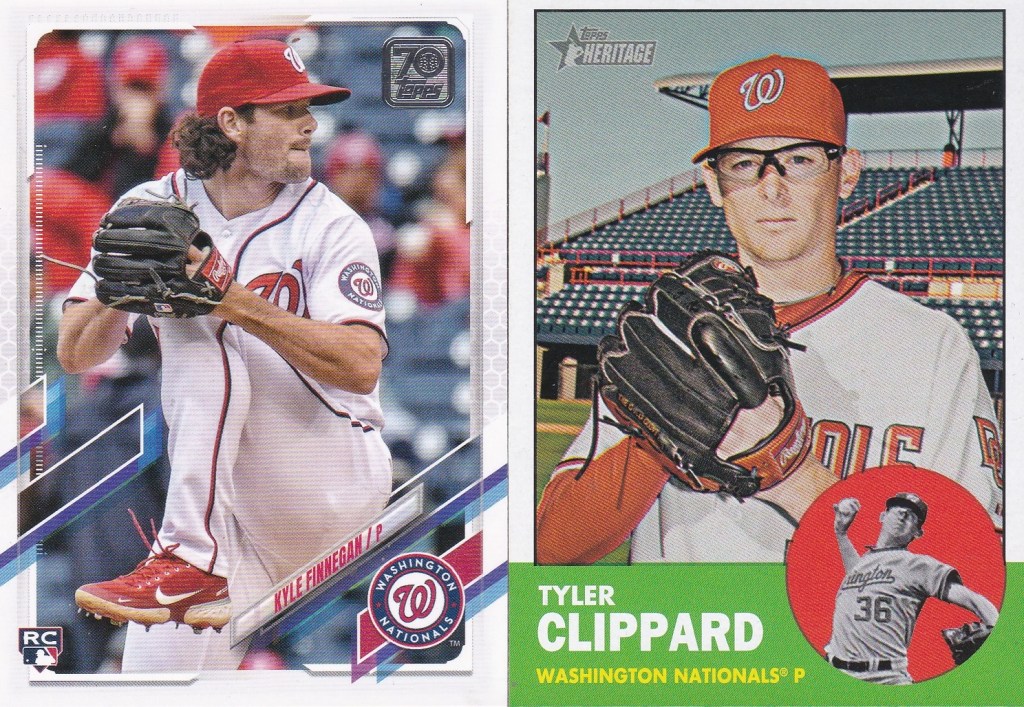
By contrast, in 2012 as the Washington Nationals were winning the team’s first N.L. East title, that team featured six top-notch relief pitchers. The team converted 75 percent of its 68 save opportunities. Closer Tyler Clippard converted 86 percent of his chances, totaling 34 saves – the same number the entire Nationals bullpen had when they set the record for ones they’ve blown.
The Nationals’ 2006 bullpen failed to preserve a lead in more than half of their 72 save opportunities at that point. In addition to the late 42 leads blown by relievers, Nationals’ pitchers – traditional starters and “openers” — gave up early leads in seven other games.
Clayton Beeter, the best available option in the season’s first half, still blew seven of his 19 save chances. One of 17 bullpen mates who had at least one blown save, Beeter faded badly enough in September that he was demoted to AAA Rochester.
Mitchell Parker blew five saves in his 22 appearances before going on the 60-day disabled list. He joined PJ Poulin, Richard Lovelady and Ken Waldichuck out for all or most of the second half with serious arm troubles. Between them, those four appeared in 83 of the team’s first 96 games. For the most part, their replacements were no better. Then, the lone exception — Orlando Ribalta — developed a sore arm in early September, likely from overwork.
Paul Toboni, head the Nats’ new management team, kept searching for yet another arm from AAA or among free agent castoffs, with little success. Washington used 34 different relievers in 2026. That’s not counting position players Jorbit Vivas and Jose Tena in mop up roles or now-departed traditional starters Zack Littell and Miles Mikolas who were often scheduled to follow pre-planned bullpen arms. Saves in consecutive games the last three days of the season evened the Nats’ record at 42 games saved and 42 leads blown.
Josiah Gray’s first career save on Sept. 25 was just the second one-run save in the ninth inning all season. Just two relievers had a bWAR of 1.0 – Brad Lord and Poulin. Twenty-nine others had negative bWARs.
Kyle Finnegan was hardly lights-out during his five seasons as the Nationals’ primary closer, but far more often than not, he got the job done. He had as many 38 saves in 2024 and made the all-star team. He was traded at the deadline in 2025 for two minor leaguers who as yet haven’t panned out.
His successor, lefty Jose A, Ferrer, showed promise, recording 11 saves. He was dealt by Toboni in the off-season to Seattle for catching prospect Harry Ford, leaving the Nationals with no prospective closer.
Without admitting as much, Tobani apparently decided this would not be the year the Nationals would make a serious playoff run when he traded as the deadline neared all-star starter Foster Griffin and slugging infielders Louis Garcia Jr. and Curtis Mead without obtaining a proven reliever in return in any of those three transactions. He did, however, receive several bullpen prospects. including two — Will Dion and Yovanny Cruz, who got late season auditions.
and a potential front-linr starter in Connerly Early.
After the trade deadline, the Nats suffered two seven-game losing streaks and had fallen as many as 14 games under. 500 after splitting their first 110 games.
Washington led the majors in runs score for most of the season, but fell to third in the last month, matched with pitchers who yielded the third most runs. Of course, losing James Wood to injury for most August after trading two guys with 40 home runs between them didn’t help. Still, the bullpen’s failure to protect leads was worse than any team had ever experienced.
It remains to be seen in 2027 and beyond if what Tobani got was worth seeing the 2026 Nats quickly turn their promising season into dreadful last two months.
Finnegan (2021) and Clippard (2012)