
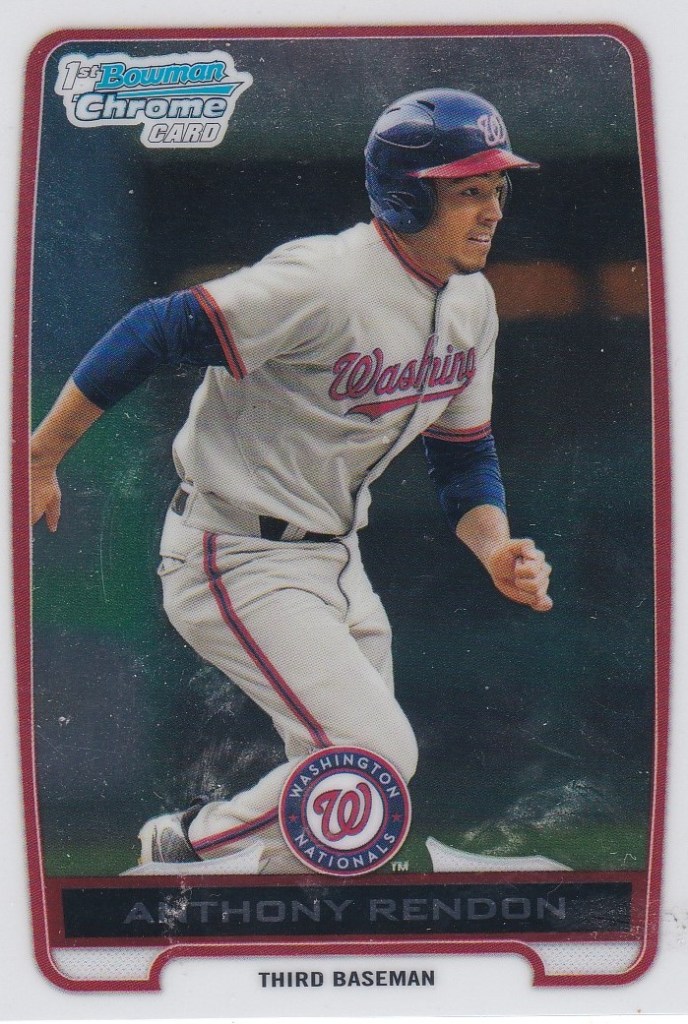
Anthony Rendon began the afternoon of April 30, 2017, with five runs batted in for the month and had yet to homer in 22 games. He was hitting .226. To call it a slow start would be an understatement for the Nationals’ third baseman, who already had a Silver-Slugger season for Washington in 2014.
Noah Syndergaard, the New York Mets’ hard-throwing right-hander, was on the mound that Sunday. After giving up five runs in the first – two driven in by Rendon’s single – Syndergaard sustained a season-ending back injury with one out in the top of the second. He wasn’t around for the worst of the day’s damage.
When the dust cleared, the Nats had won, 23-5. Rendon had six hits in six times up, with three home runs, a double and a team-record 10 runs batted in. He was just the second player in MLB history to drive in 10 runs with six hits, a double and three homers.
Walker Cooper of the Reds had done in 1949 — 68 seasons earlier. Shawn Green had 10 RBIs in his four-homer game in 2002. The last player to have 10 RBIs in game – Garret Anderson of the Angels – had done 10 years earlier.
Rendon hit a solo homer in the third and a three-run shot in the fourth off reliever Sean Gilmartin. The Mets had climbed back to within a run, 6-5, when Washington came to bat in the fourth, but Rendon stretched the lead to 11-5. His third homer came off a catcher, Kevin Plawecki, pitching in the eighth inning with the Nationals ahead, 19-5.
Joe Ross had started for the Nats, but didn’t make it past four innings, giving up five runs on seven hits. Reliever Matt Albers pitched a scoreless fifth and sixth to get the win.
A bases-clearing double gave Rendon nine RBIs and put the Nats up, 13-5, at the end of the fifth inning. His solo-homer in the eighth produced his 10th RBI. Rendon’s six hits raised his batting average 50 points to .276.
By season’s end, he was up to .301, topping .300, hitting 25 home runs and driving in 100 runs for the first time with the Nationals. “Tony Two Bags” also topped 40 doubles for the first of three straight seasons, with 41.
The second was the lone inning in which the Nats didn’t score. The Mets had never allowed an opposing batter to have 10 RBIs in a game before this game. The 23 runs was the National’s team record at that time, which Washington topped a year later, again against the Mets, with 25.
For another account of this game, check out SABR’s Games Project essay by Laura H. Peebles.
 Washington baseball history