
The expansion Senators, surprisingly, split their inaugural season’s first 60 games. After beating the Orioles on June 15, the Nats stood 30-30 in fifth place in the 10-team league when they arrived in Boston to begin a four-game series. The Red Sox were two games under .500 in sixth place.
After blowing a 6-0 lead Friday night, the team lost 14-9 and fell to 30-31. Washington couldn’t hold a 5-1 lead on Saturday and lost 6-5, but a sweep of a Sunday double-header still could get the Nats back even.
Left-hander Carl Mathias made his first major league start in the first game against veteran Ike Delock. Neither teams scored in the first three innings.
The Nats scored a run in the top of the fourth, but the Red Sox got two off Mathias in the bottom of the inning. Washington added four runs in the fifth, aided by Delock’s throwing error and a two-run homer by Dale Long. Mathias hit a batter to force in a run but left the bases loaded in the Boston fifth.
Both teams scored two more in the sixth. Pete Daley homered for the Nats and Don Buddin for the Sox. Boston lifted Delock, but Nats’ manager Mickey Vernon stuck with Mathias, who made a 7-5 lead stand up through the seventh and eighth. The Red Sox had just six hits through eight innings.
Vernon knew Mathias was tiring, but after at first sending pitcher Marty Kutyna to the on-deck circle, he let Mathias bat; he singled to open the ninth and eventually scored on Gene Woodling’s single. With the bases loaded, Willie Tasby homered to deep right-center, giving the Nats a seemingly safe 12-5 lead.
Mathias stayed in to pitch the bottom of the ninth and face left-hand batting Vic Wertz, who grounded out to first. Then Buddin singled to right. Pinch-hitter Billy Harrell struck out, so Mathias was an out away from a victory with a seven-run lead. A single to center by Chuck Shilling sent Buddin to second.
Carroll Hardy’s single drove in Buddin and made the score 12-6, but still Vernon stuck with his starter. Only when Gary Geiger walked to load the bases did the manager call for the Nats’ top reliever, Dave Sisler, to come in. His earned-run average entering the game was 1.67.
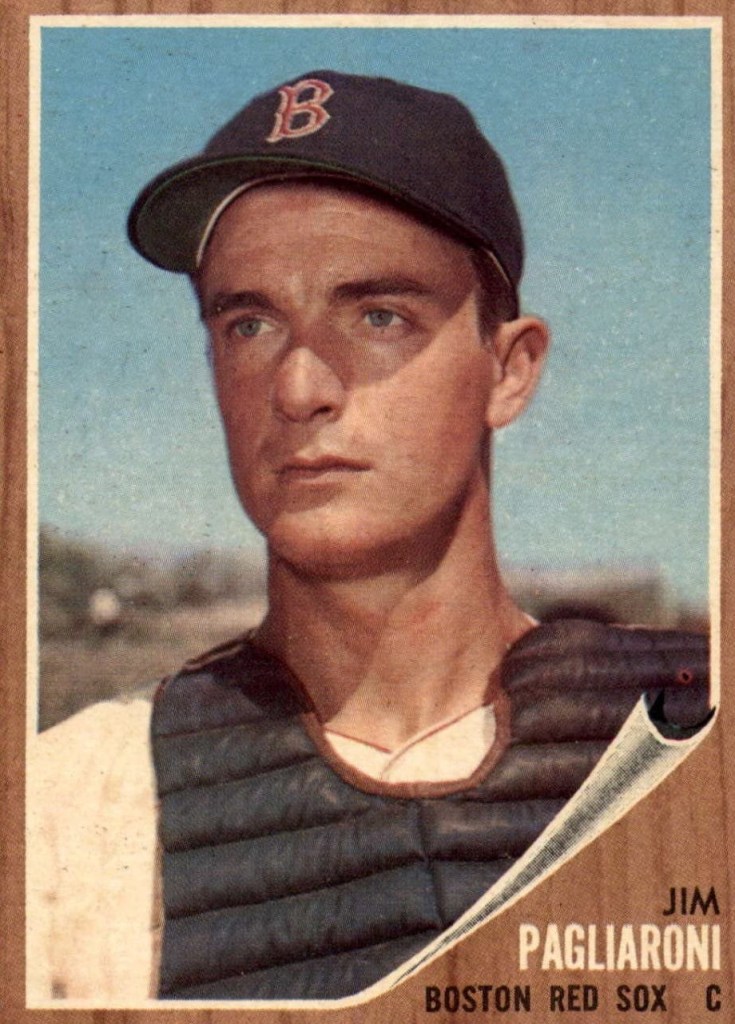
Having warmed up in a hurry, Sisler couldn’t find the plate. He walked Jackie Jensen and Frank Malzone, bringing in two more runs. Now Jim Pagliaroni represented the tying run at bat. The Sox catcher connected on Sisler’s fourth pitch, sending the ball over the wall in left-center to tie score at 12-12.
Obviously rattled, Sisler walked Wertz. Vernon headed to the mound to bring in Kutyna, who promptly yielded a single to Buddin, his third hit of the game. Pete Runnels pinch-ran for Wertz at second. Pinch-hitter Russ Nixon grounded a single to right, scoring Runnels with the eighth run of the inning and giving Boston a 13-12 victory.
This game remains the greatest ninth-inning comeback in Red Sox history. Sixty years earlier, on May 23, 1901 — the first-year A.L. Senators actually blew a 13-5 ninth-inning lead at Cleveland. The home team rallied for nine runs after two outs and nobody on base. On July 7, 1922, those Senators blew a 9-2 lead over the Tigers, who scored nine times in the ninth to win, 11-9.
Pagliaroni added insult to injury by winning the day’s second game with another home run, this one in the 13th inning. The Red Sox catcher was 2-for11 in the twin bill. His two-run pinch-hit homer the day before had been the winning margin in that one.
The ninth-inning collapse on Sunday was Washington’s third-straight loss. After losing the second game, the Nats proceeded to lose six more in a row and never saw .500 again. The season totally collapsed with a 14-game skid that began in late August.
My memory of listening to this game on the radio has never faded. It pops into my head every time today’s Nationals carry a big lead into the ninth. Just remember the lesson here: No lead is safe.
 Washington baseball history
I remember watching this game, one of a relatively few that were telecast, and watching in horror. I knew then it was going to be what you so exquisitely describe — the train running off the rails and down the cliff for all time. I think that was the day, at age 13, five months after my Bar Mitzvah, that I actually became a man and put foolish hopes aside for all time.
LikeLiked by 1 person