
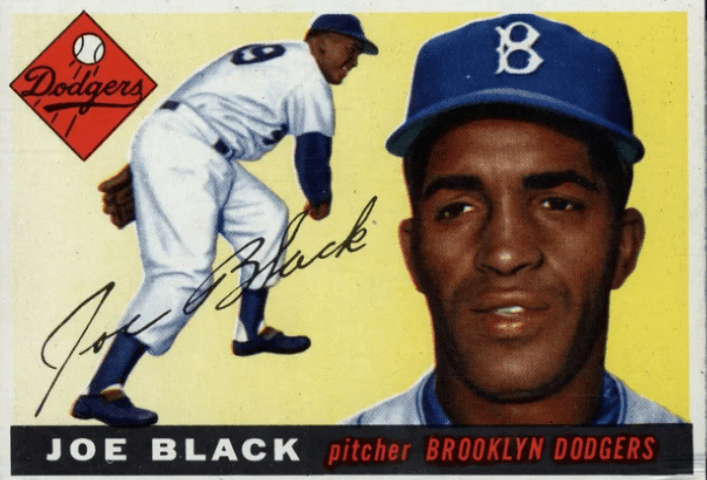
Although Carlos Paula in 1953 became Washngton’s first acknowledged non-white player, Paula was born in Cuba. In August 1957, the Senators finally had an American-born black player, if only briefly: pitcher Joe Black, the 1952 rookie-of-the year who had helped the Dodgers win the National League pennant.
It shouldn’t have taken so long. Griffith Stadium in D.C. was the home field in the 1940s for several future Hall of Famers who played for the Negro National League’s Homestead Grays, but longtime Senators’ owner Clark Griffith didn’t try to sign any of them.
Griffith’s teams did include many Cubans, at least one of whom – Roberto “Bobby” Estalella – was dark-skinned enough to be “regarded by many to be modern baseball’s first black major leaguer,” wrote Brad Snyder, author of Beyond the Shadow of the Senators, a history of the Homestead Grays’ time in D.C. and the integration of baseball. Estalella and other Cuban players with Washington endured a torrent of racial epithets.
When Paula debuted in September 1954, 11 of the 16 MLB teams already had fielded a black player, leaving just the Yankees, Phillies, Tigers and Red Sox still segregated. Although Cuban-born Minnie Minoso was the first to integrate the White Sox in 1951, Bob Boyd, an American-born black player debuted later that season.
Boston would be the last Major League team to integrate when infielder Pumpsie Green debuted in July 1959. Although the Senators had no black players in 1958, outfielder Lenny Green in 1959 was the first American-born black player who saw significant playing time.
When he signed with Washington, Joe Black already had serious arm problems and had been released by AA Tulsa in the Texas League. The bottom-dwelling Senators were willing to take a chance on him.
Black had lost his fastball and was hit hard. In seven games in relief over 12 and 2/3 innings, he yielded 22 hits. He was charged with a loss and had a 7.11 ERA.
His last appearance came on September 11, 1957, against Detroit. The Senators unconditional released him on November 25.
Because a close friend had died during a minor surgery, Black refused to undergo a recommended operation that would have removed bone chips from his elbow. So at 33, his career in pro ball was over. Fortunately for Black, he had a college degree and landed a teaching job before becoming an executive with the Greyhound bus company.
Black died on May 17, 2002, in Scottsdale, Arizona, at age 78. He was buried in Plainfield, New Jersey where he was born and raised.
 Washington baseball history