
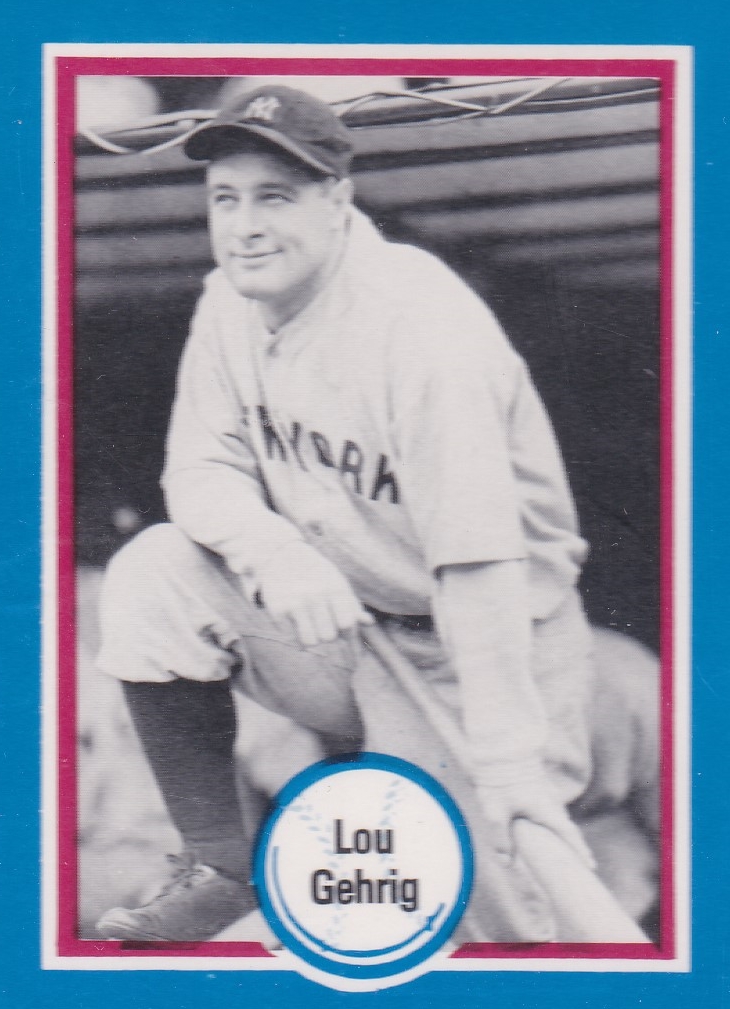
On April 26, 1931, Lou Gehrig hit a ball into the centerfield bleachers at Washington’s Griffith Stadium for what should have been a long home run off the Nats’ Fred “Firpo” Marberry.
Hit so hard, the ball caromed back to Senators’ centerfielder Harry Rice (Sam was in right), who caught it on the fly. With two outs in the top of the first inning, Yankees’ shortstop Lyn Lary was running hard as the ball was hit. He was headed to third when he saw the ball being caught, and immediately began jogging back to New York’s dugout, thinking the inning was over. For some reason, manager Joe McCarthy, coaching at third base, made no attempt to stop Lary. Gehrig, not noticing what Lary was doing, continued to jog around the bases.
Umpire Bill McGowan called Gehrig out as he reached home plate for passing Lary. Absent such details from newspapers of the day, I can only guess 95 years later what the umpires were thinking. Presumably, one or all three of them saw the ball clear the fence and assumed most of the players knew it was a home run. Nobody on the bench must have bothered to holler to Lary. It’s not clear why Lary was not called out for leaving the base baths, which itself would have been the third out and left Gehrig credited with a single or double. Perhaps McGowen acted quickly to settle the matter before arguments got too heated.
As it was, the Iron Man was credited with a triple, the assumption being, I guess, that the Senators made no attempt to tag him as he rounded the bases. It’s a safe bet that confusion reigned.
In any case, the lost a homer had an impact on the game result: Washington won, 9-7, the Yankees’ missing the two runs that should scored on the Gehrig homer. (Under a rule change that took effect in 1931, Gehrig later in the game was charged with a time at-bat for a run-scoring fly ball that would have been a sacrifice fly in previous seasons. and as it would be today. He got credit for an RBI, but that rule cost Gehrig several points on his batting average for the rest of his career, as it did all batters who hit run-scoring flies from 1931-38, and from 1940-53.)
Far more significant in retrospect, however, was that Gehrig ended the season tied with Babe Ruth for the home-run title, instead of winning it outright.
Just as significant, had he not lost those two RBIs, his career-high total in 1931 of 185 – an American League record that still stands – would have been an even more jaw-dropping 187.
This also appeared in the June 14, 2025, edition of Here’s The Pitch, the daily online post of the Internet Baseball Writers Association of America.
 Washington baseball history