
The lengthening of MLB games has led to rule changes aimed at producing more actions in less time. Some fans like the changes. Others find them appalling. The “Manfred man” runner on second base to begin an extra inning seems to draw the most ire.
Banning extreme shifts, which had not existed much 20 or 30 years ago, doesn’t seem to have had a major impact. Widening the bases surely has avoided at least a few injuries and has encouraged more base-stealing. That’s exciting and good. Making relief pitchers face at least three batters probably has helped.
The pitch clock, on the other hand, is about as well intended as the path to hell. Yes, pitcher and batters take too long to do what they are supposed to do. But just let the umpire have the discretion to enforce the time rule without mandating a violation.
It did not have to come to this. I am old enough to recall when games rarely lasted more than two and half hours. Take, for instance, the last-place 1962 Senators.
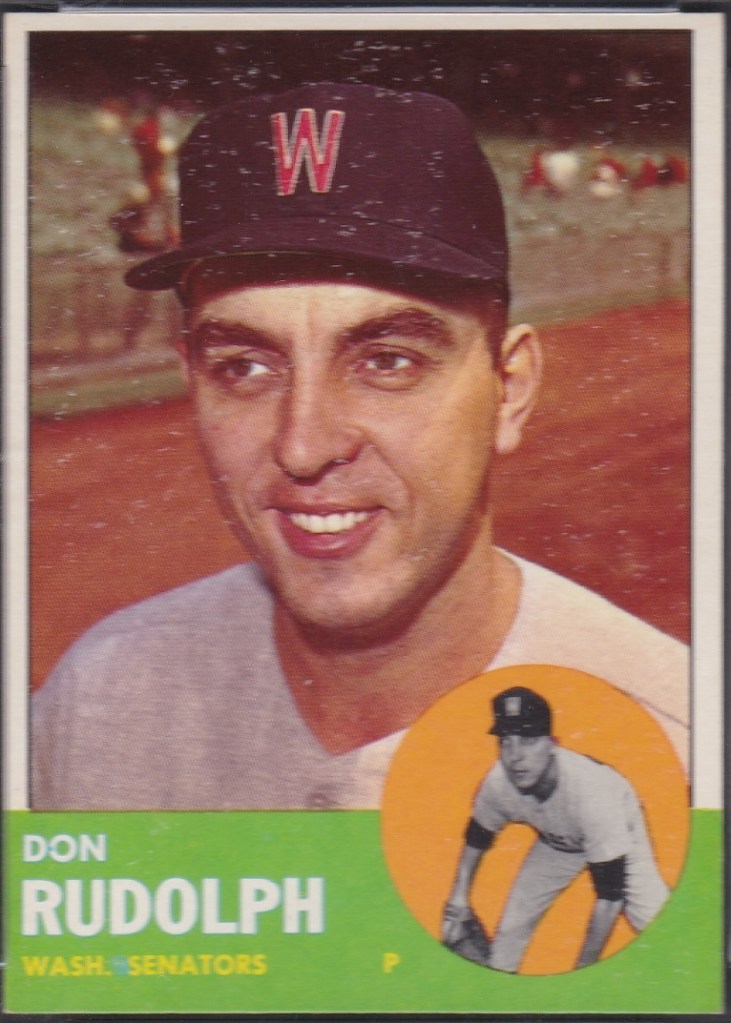
Led by the incredibly fast-working Don Rudolph, the Washington pitching staff led the league in games completed in less than two hours: 18. The Cardinals led the N.L. with just five games of less than two hours.
The Senators also led in games finished in less than two hours and 10 minutes, the then-standard for quickness, with 34. No other team in either league had more than 25.
Rudolph won a game in 1962 that lasted 92 minutes, tied for the shortest game of the season. The next day, teammate Dave Stenhouse pitched a 1-0 shutout in an hour and 44 minutes. Rudolph started six games that were over in 1:47 or less. Claude Osteen, another Senator, pitched seven games in less than 2:10, third most in the league. In contrast, every New York Mets game in 1962 took longer than 2:10.
So Washington led both leagues in quick games – on the way to 100 losses, of course. Why prolong the agony?
“It should not require three hours to do a two-hour job,” Rudolph told the Sporting News in January 1963. The average length of a game in 1962 was two hours and 38 minutes. Don’t blame the Senators.
Average games each year in the Sixties ranged from 2.30 to 2:38. Between 1954, when the average first reached 2:30, and 1981, game lengths on average remained in a narrow range – 2:29 to 2.38.
Major League games first began averaging more than two hours in 1934. From 1911, the first year game times were tallied, until 1933, the average length of games remained between 1:51 and 1:59.
The average game length topped three hours for the first time in 2000 before falling below that for the next 11 seasons. From 2012 to 2022, the typical game lasted at least three hours.
Then came the rule changes. The average fell from 3:06 in 2022 to 2:42 in 2023 and is likely to fall below 2:40 this season. Don Rudolph would be pleased.
 Washington baseball history
Love the “Manfred Man” appellation!
LikeLike