
In the first year in Washington, the Nationals surprisingly were leading the National League East half way through the season. After winning 24 one-run games before the All-Star break, thanks in large part to the work of their All-Star closer, Chad Cordero, the Nats had suddenly experienced a reversal of fortune.
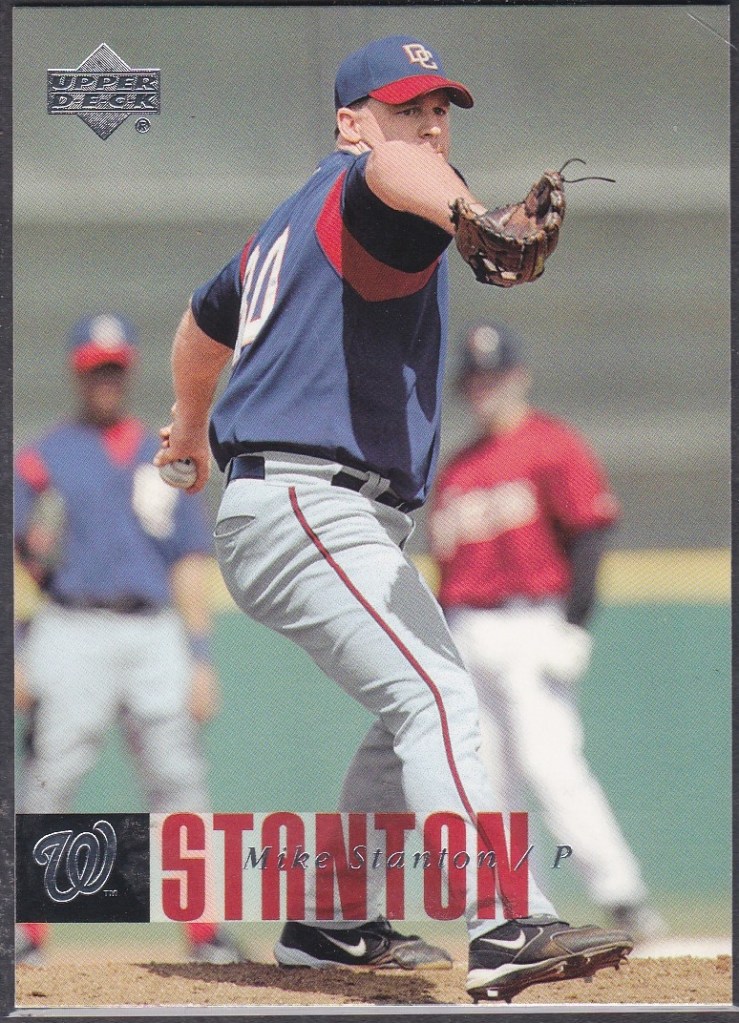
In Milwaukee on July 15, the Nats other All-Star, starter Livan Hernandez, carried a 3-2 lead over the Brewers into the eighth before yielding a two-out homer to Carlos Lee, tying it at 3. In the bottom of the10th. Luis Ayala gave up a lead-off double to Chris Magruder, who was bunted to third. After Ayala intentionally walked Rickey Weeks, manager Frank Robinson brought in newly acquired Mike Stanton, the veteran left hander, to face the left-hand batting Lyle Overbay.
Before making a pitch, however, Stanton decided to try to pick off the rookie Weeks. His throw over looked to have been in time, but first base umpire Paul Schrieber immediately signaled that Stanton had balked.
Game over. Magruder trotted home from third with the winning run. Robinson and Stanton were livid, but to no avail. The Nats had lost their fourth game in a row – the third by one run. Their lead over the Atlanta Braves was cut to a game and a half.
In the clubhouse, Robinson played reporters video of the pick-off throw, insisting that it showed that Stanton had not balked. “We were in a ball game that we’re fighting for, and it is taken away from us,” Robinson told the media.
Perhaps the game was an omen of what was to come. By late July, the Braves had overtaken the Nats, and by season’s end, Washington was in the N.L. East’s basement, falling from 19 games over .500 to finish at 81-81.
The Milwaukee crowd of 40,690 got to witness something that had happened at that point less than two dozen times in MLB history: a game won on a walk-off balk. The loss was the first of its kind for the Nats. Thankfully, through 2023, it hasn’t happened again, although now a game could end on a pitch-clock violation. Please, no!
Fifteen of the game-ending balks have happened since 2000, even though a 2016 rules revision said: “Umpires should bear in mind that the purpose of the balk rule is to prevent the pitcher from deliberately deceiving the base runner.”
Since the balk rule was established in 1898, the only decades that did not have any game-ending balks apparently were the 1920s and 1950s, according to a 2015 post (since updated) by Adam Gilfix of the Harvard Sports Analysis Collective. He compiled a list of all the game-ending balks that he was able to document through July 2016. There have been four more since then.
Some balks are obvious, although many do not involve a pitcher’s attempt to deceive a base runner. Others are judgment calls by the umpires, such as when a pitcher attempts a pick-off after striding toward the plate instead toward first, or when the pitcher does not pause after coming to a set. Regardless of why a balk is called, this is not the way players or fans — or umpires — should want a game to end.
 Washington baseball history