
Beer sales weren’t allowed in Washington’s Griffith Stadium until August 10, 1956. That left only Forbes Field in Pittsburgh and Connie Mack Stadium in Philadelphia as the only major league ball parks where, thanks to Pennsylvania law, fans couldn’t buy beer.*
Washington’s longtime owner Clark Griffith had died in October 1955. A teetotaler, he favored prohibition, even though he gladly allowed huge beer signs to tower above the back walls of his stadium.
Badly in need of revenue, Clark Griffith had agreed to let the St. Louis Browns move 30 miles up the road to Baltimore in 1954 after the new Orioles owner, Jerold Hoffberger, agreed to have his National Bohemian Beer sponsor Senators’ radio and TV broadcasts.
During the 1933 World Series, the last time the Senators hosted a game and the last before the end of prohibition, fans began chanting “We want beer,” but Griffith was unmoved. President Herbert Hoover had been subjected to a similar chant during Game 3 of the 1931 World Series in Philadelphia.
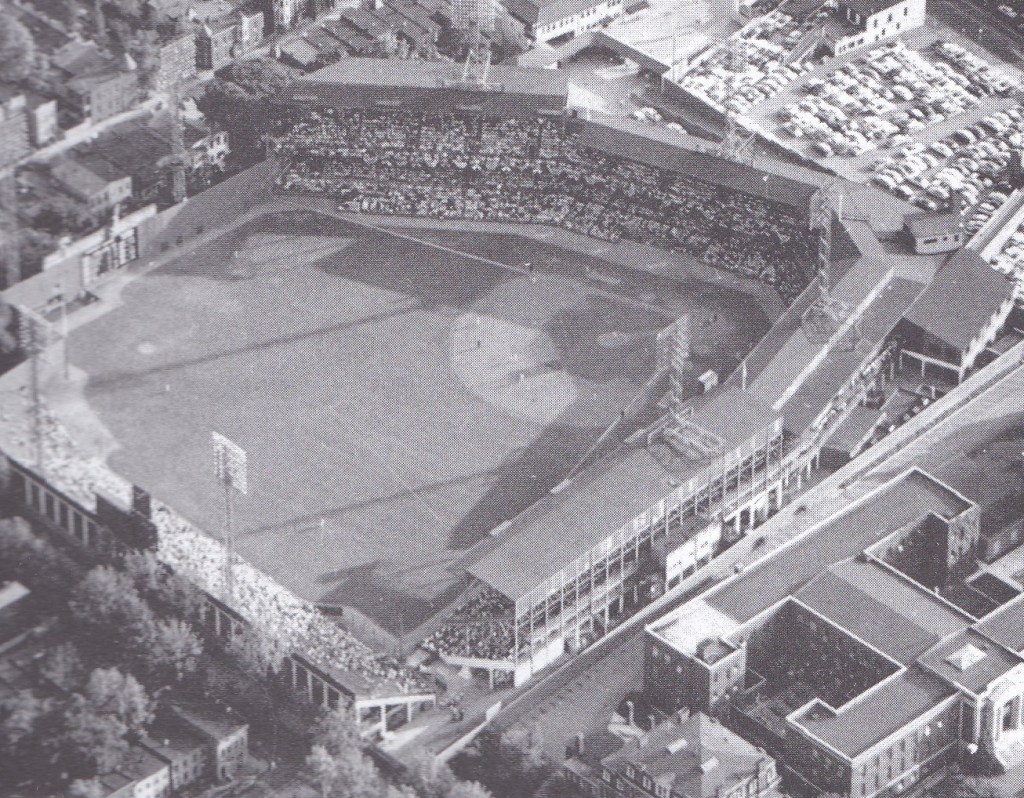
Nephew Calvin Griffith, who with his sister inherited the team, quickly applied for a beer-sales license in 1956. Before the season and before Griffith Stadium got the beer license, several rows of tables and chairs were built in front of the left-field bleachers. What eventually became known as the “beer garden” cut the distance to the left-field fence to 350 feet from 388 in 1955. Thus, the stadium had a place to limit where alcohol would be sold and to reduce the dimensions that had made Griffith Stadium one of the toughest places to hit home runs.
Right-hand sluggers Roy Sievers, Jim Lemon and, later, Harmon Killebrew took full advantage of the friendlier distances. Lemon, in fact, hit 21 of his 27 homers at his home park. Sievers established a new team record with 29 homers. He would break his own record in 1957, leading the league with 42 homers, 26 of them hit at home.
The original beer-sales area had room for just 170 people, and the beer was sold in paper cups. People weren’t allowed the stand up to cheer while holding their beers, lest they be reprimanded by stadium security.
In Pennsylvania, state law wasn’t changed to allow the Phillies and Pirates to sell beer until July 1961, even though fans in Philadelphia had long been bringing their own – and, not infrequently, throwing empty cans onto the field. Under the new law, beer bought in the stadiums was to be sold, as in D.C., in paper cups – and not at all on Sundays.
At Griffith Stadium, meanwhile, beer sales were expanded in 1957 to a concession area under the grandstands, although the beer garden remained.
When the expansion team moved into the old stadium for the 1961 season, the beer garden was removed and beer was sold at concession stands. The distance to the left-field fence was restored to its 1955 distance. The new team’s owners assumed most of the power hitters they had drafted hit from the left side, and they wanted to make it tougher for other teams’ right-handed sluggers. When the expansion Senators moved into D.C. Stadium in 1962, beer was sold at concession stands throughout the new ball park and in the stands.
Nowadays, people in the super-expensive seats at Nationals Park don’t have to get up to place orders for their food, beer or other alcoholic beverages. Yet the sound of a vendor yelling “Cold beer here” remains part of being at a game, for better or worse, even if you don’t imbibe.
A version of this appeared on the Aug. 19, 2023, Here’s the Pitch, the online newsletter of the Internet Baseball Writers Association of America.
- *A similar law in Ontario, Canada, kept the Toronto Blue Jays from selling beer during that expansion teams first five seasons. Beer sales were allowed at Exhibition Stadium, starting in 1982.
 Washington baseball history